




|
Chapter 4
|
Глава́ д҃
|
|
1
|
1
|
|
Then the second, that had spoken of the strength of the king, began to say,
|
И҆ нача̀ вторы́й глаго́лати, рекі́й ѡ҆ крѣ́пости ца́рстѣй:
|
|
2
|
2
|
|
O ye men, do not men excel in strength, that bear rule over sea and land, and all things in them?
|
ѽⷩ҇̑, мꙋ́жїе! не премога́ютъ ли человѣ́цы, зе́млю и҆ мо́ре ѡ҆бдержа́ще, и҆ всѧ̑, ꙗ҆̀же въ ни́хъ;
|
|
3
|
3
|
|
But yet the king is more mighty: for he is lord of all these things, and hath dominion over them; and whatsoever he commandeth them they do.
|
ца́рь же премога́етъ и҆ госпо́дствꙋетъ всѣ́ми и҆ влады́чествꙋетъ и҆́ми, и҆ всѐ, є҆́же рече́тъ и҆̀мъ, творѧ́тъ:
|
|
4
|
4
|
|
If he bid them make war the one against the other, they do it: if he send them out against the enemies, they go, and break down mountains, walls, and towers.
|
а҆́ще рече́тъ и҆̀мъ твори́ти бра́нь ко дрꙋ́гъ дрꙋ́гꙋ, творѧ́тъ: и҆ а҆́ще по́слетъ и҆̀хъ на сꙋпоста́ты, и҆́дꙋтъ и҆ и҆стрыва́ютъ го́ры и҆ стѣ́ны и҆ столпы̀,
|
|
5
|
5
|
|
They slay and are slain, and transgress not the king's commandment: if they get the victory, they bring all to the king, as well the spoil, as all things else.
|
оу҆бива́ютъ и҆ оу҆бива́еми быва́ютъ, и҆ царе́ва словесѐ не престꙋпа́ютъ: а҆́ще же побѣдѧ́тъ, царю̀ прино́сѧтъ всѧ̑, и҆ є҆ли̑ка а҆́ще плѣнѧ́тъ, и҆ и҆́на всѧ̑:
|
|
6
|
6
|
|
Likewise for those that are no soldiers, and have not to do with wars, but use husbandry, when they have reaped again that which they had sown, they bring it to the king, and compel one another to pay tribute unto the king.
|
и҆ є҆ли́цы не вою́ютъ, нижѐ ѡ҆полча́ютсѧ, но дѣ́лаютъ зе́млю, па́ки, є҆гда̀ сѣ́ютъ, зажина́юще прино́сѧтъ царе́ви,
|
|
7
|
7
|
|
And yet he is but one man: if he command to kill, they kill; if he command to spare, they spare;
|
и҆ є҆ди́нъ дрꙋга́го понꙋжда́юще, прино́сѧтъ да́нь царю̀:
|
|
8
|
8
|
|
if he command to smite, they smite; if he command to make desolate, they make desolate; if he command to build, they build;
|
и҆ то́й са́мъ є҆ди́нъ є҆́сть: а҆́ще рече́тъ оу҆би́ти, оу҆бива́ютъ: а҆́ще рече́тъ ѿпꙋсти́ти, ѿпꙋска́ютъ: рече́тъ порази́ти, поразѧ́тъ:
|
|
9
|
9
|
|
if he command to cut down, they cut down; if he command to plant, they plant.
|
рече́тъ разори́ти разорѧ́тъ: рече́тъ созида́ти, созида́ютъ: рече́тъ, посѣцы́те, посѣца́ютъ: рече́тъ насади́ти, насажда́ютъ:
|
|
10
|
10
|
|
So all his people and his armies obey him: furthermore he lieth down, he eateth and drinketh, and taketh his rest:
|
и҆ всѝ лю́дїе є҆гѡ̀ и҆ си̑лы є҆гѡ̀ слꙋ́шаютъ є҆ди́нагѡ: и҆ къ си̑мъ то́й возлежи́тъ, ꙗ҆́стъ и҆ пїе́тъ и҆ спи́тъ:
|
|
11
|
11
|
|
and these keep watch round about him, neither may any one depart, and do his own business, neither disobey they him in any thing.
|
ті́и же стрегꙋ́тъ ѡ҆́крестъ є҆гѡ̀ и҆ не мо́гꙋтъ ѿитѝ, кі́йждо твори́ти дѣ́лъ свои́хъ, нижѐ преслꙋ́шаютъ є҆гѡ̀:
|
|
12
|
12
|
|
O ye men, how should not the king be mightiest, when in such sort he is obeyed? And he held his tongue.
|
ѽⷩ҇̑, мꙋ́жїе! ка́кѡ не превозмога́етъ ца́рь, є҆го́же та́кѡ слꙋ́шаютъ; И҆ оу҆молча̀.
|
|
13
|
13
|
|
Then the third, who had spoken of women, and of the truth, (this was Zorobabel) began to speak.
|
Тре́тїй же, и҆́же речѐ ѡ҆ жена́хъ и҆ ѡ҆ и҆́стинѣ, то́й є҆́сть зорова́вель, нача̀ глаго́лати:
|
|
14
|
14
|
|
O ye men, it is not the great king, nor the multitude of men, neither is it wine, that excelleth: who is it then that ruleth them, or hath the lordship over them? are they not women?
|
ѽⷩ҇̑, мꙋ́жїе! не вели́къ ли є҆́сть ца́рь и҆ мно́зи человѣ́цы, и҆ вїно̀ не премога́етъ ли; кто́ же є҆́сть вла́ствꙋѧй и҆́ми и҆лѝ кто̀ госпо́дствꙋѧй и҆́ми; не жєны̀ ли;
|
|
15
|
15
|
|
Women have borne the king and all the people that bear rule by sea and land.
|
жєны̀ роди́ша царе́й и҆ всѣ́хъ люді́й, и҆̀же госпо́дствꙋютъ над̾ мо́ремъ и҆ земле́ю:
|
|
16
|
16
|
|
Even of them came they: and they nourished them up that planted the vineyards, from whence the wine cometh.
|
и҆ ѿ тѣ́хъ рожде́ни сꙋ́ть, и҆ ты̑ѧ воздои́ша тѣ́хъ, и҆̀же насади́ша вїногра́ды, ѿ кото́рыхъ вїно̀ твори́тсѧ:
|
|
17
|
17
|
|
These also make garments for men; these bring glory unto men; and without women cannot men be.
|
и҆ ты̑ѧ творѧ́тъ ри̑зы (кра̑сны) человѣ́кѡмъ, и҆ ты̑ѧ творѧ́тъ сла́вꙋ человѣ́кѡмъ, и҆ не мо́гꙋтъ человѣ́цы бы́ти без̾ же́нъ:
|
|
18
|
18
|
|
Yea, and if men have gathered together gold and silver, or any other goodly thing, do they not love a woman which is comely in favour and beauty?
|
и҆ а҆́ще соберꙋ́тъ зла́то и҆ сребро̀ и҆ всѧ́кꙋ ве́щь кра́снꙋ, и҆ оу҆ви́дѧтъ женꙋ̀ є҆ди́нꙋ добрꙋ̀ зра́комъ и҆ красото́ю,
|
|
19
|
19
|
|
And letting all those things go, do they not gape, and even with open mouth fix their eyes fast on her; and have not all men more desire unto her than unto silver or gold, or any goodly thing whatsoever?
|
и҆ всѧ̑ сїѧ̑ ѡ҆ста́вльше, на ню̀ вне́млютъ, и҆ ѿве́рстыми оу҆сты̑ зрѧ́тъ ю҆̀, и҆ всѝ ѻ҆́ныѧ жела́ютъ па́че зла́та и҆ сребра̀ и҆ всѧ́кїѧ ве́щи предрагі́ѧ:
|
|
20
|
20
|
|
A man leaveth his own father that brought him up, and his own country, and cleaveth unto his wife.
|
человѣ́къ ѻ҆тца̀ своего̀ ѡ҆ставлѧ́етъ, и҆́же воспита̀ є҆го̀ и҆ свою̀ странꙋ̀, и҆ ко свое́й женѣ̀ прилѣплѧ́етсѧ,
|
|
21
|
21
|
|
He sticketh not to spend his life with his wife, and remembereth neither father, nor mother, nor country.
|
и҆ съ жено́ю ѡ҆ставлѧ́етъ дꙋ́шꙋ, и҆ нижѐ ѻ҆тца̀ па́мѧтꙋетъ, ни ма́тере, нижѐ страны̀:
|
|
22
|
22
|
|
By this also ye must know that women have dominion over you: do ye not labour and toil, and give and bring all to the woman?
|
и҆ ѿсю́дꙋ подоба́етъ ва́мъ разꙋмѣ́ти ꙗ҆́кѡ жєны̀ вла́ствꙋютъ ва́ми: не болѣ́знꙋете ли, и҆ трꙋжда́етесѧ, и҆ всѧ̑ жена́мъ даетѐ и҆ прино́сите;
|
|
23
|
23
|
|
Yea, a man taketh his sword, and goeth his way to rob and to steal, to sail upon the sea and upon rivers;
|
и҆ взе́млетъ человѣ́къ ѻ҆рꙋ́жїе своѐ, и҆ и҆схо́дитъ на пꙋ́ть твори́ти разбо́й, (оу҆бі̑йства,) и҆ татьбꙋ̀ и҆ на мо́ре пла́вати и҆ на рѣ́ки,
|
|
24
|
24
|
|
and looketh upon a lion, and goeth in the darkness; and when he hath stolen, spoiled, and robbed, he bringeth it to his love.
|
и҆ льва̀ ви́дитъ, и҆ во мра́къ вхо́дитъ: и҆ є҆гда̀ оу҆кра́детъ и҆ похи́титъ и҆ коры́сть ѡ҆брѧ́щетъ, ко возлю́бленнѣй свое́й прино́ситъ:
|
|
25
|
25
|
|
Wherefore a man loveth his wife better than father or mother.
|
и҆ па́че лю́битъ человѣ́къ женꙋ̀ свою̀, не́жели ѻ҆тца̀ и҆ ма́терь:
|
|
26
|
26
|
|
Yea, many there be that have run out of their wits for women, and become servants for their sakes.
|
и҆ мно́зи ѡ҆безꙋ́мишасѧ ѿ ли́цъ же́нскихъ и҆ рабѝ бы́ша ра́ди тѣ́хъ,
|
|
27
|
27
|
|
Many also have perished, have erred, and sinned, for women.
|
и҆ мно́зи погибо́ша и҆ прельсти́шасѧ и҆ согрѣши́ша ра́ди же́нъ:
|
|
28
|
28
|
|
And now do ye not believe me? is not the king great in his power? do not all regions fear to touch him?
|
и҆ нн҃ѣ не вѣ́рꙋете ли мнѣ̀; не вели́къ ли є҆́сть ца́рь во вла́сти свое́й; не всѧ̑ ли страны̑ не смѣ́ютъ прикоснꙋ́тисѧ є҆мꙋ̀;
|
|
29
|
29
|
|
Yet did I see him and Apame the king's concubine, the daughter of the admirable Bartacus, sitting at the right hand of the king,
|
ви́дѣхъ є҆го̀ и҆ а҆пами́ню, дще́рь варта́ка ди́внагѡ, нало́жницꙋ царе́вꙋ, сѣдѧ́щꙋю ѡ҆деснꙋ́ю царѧ̀
|
|
30
|
30
|
|
and taking the crown from the king's head, and setting it upon her own head; she also struck the king with her left hand.
|
и҆ ѿе́млющꙋю дїади́мꙋ со главы̀ царє́вы и҆ возлага́ющꙋ на себѐ, и҆ по лани́тѣ бїѧ́ше царѧ̀ лѣ́вою рꙋко́ю:
|
|
31
|
31
|
|
And yet for all this the king gaped and gazed upon her with open mouth: if she laughed upon him, he laughed also: but if she took any displeasure at him, the king was fain to flatter, that she might be reconciled to him again.
|
и҆ кромѣ̀ си́хъ ца́рь ѿве́рстыми оу҆сты̑ зрѧ́ше на ню̀: и҆ а҆́ще посмѣе́тсѧ пред̾ ни́мъ, смѣе́тсѧ и҆ ѻ҆́нъ: а҆́ще же разгнѣ́вана бꙋ́детъ на́нь, ласка́етъ ю҆̀, до́ндеже примири́тсѧ є҆мꙋ̀:
|
|
32
|
32
|
|
O ye men, how can it be but women should be strong, seeing they do thus?
|
ѽⷩ҇̑, мꙋ́жїе, не си̑льны ли жєны̀, ꙗ҆́кѡ си́це творѧ́тъ;
|
|
33
|
33
|
|
Then the king and the princes looked one upon another: so he began to speak of the truth.
|
И҆ тогда̀ ца́рь и҆ вельмо́жи смотрѧ́хꙋ дрꙋ́гъ на дрꙋ́га. И҆ нача̀ глаго́лати ѡ҆ и҆́стинѣ:
|
|
34
|
34
|
|
O ye men, are not women strong? great is the earth, high is the heaven, swift is the sun in his course, for he compasseth the heavens round about, and fetcheth his course again to his own place in one day.
|
ѽⷩ҇̑, мꙋ́жїе, не си̑льны ли жєны̀; вели́ка землѧ̀, и҆ высо́ко не́бо, и҆ бы́стро тече́нїемъ со́лнце, ꙗ҆́кѡ ѡ҆браща́етсѧ на крꙋ́зѣ небе́снѣмъ и҆ па́ки притека́етъ на мѣ́сто своѐ во є҆ди́нъ де́нь:
|
|
35
|
35
|
|
Is he not great that maketh these things? therefore great is the truth, and stronger than all things.
|
не вели́къ ли, и҆́же сїѧ̑ твори́тъ; и҆ и҆́стина вели́ка и҆ крѣпча́е па́че всѣ́хъ:
|
|
36
|
36
|
|
All the earth calleth upon the truth, and the heaven blesseth it: all works shake and tremble at it, and with it is no unrighteous thing.
|
всѧ̀ землѧ̀ и҆́стинꙋ призыва́етъ, и҆ не́бо ѻ҆́нꙋю благословлѧ́етъ, и҆ всѧ̑ дѣла̀ трѧсꙋ́тсѧ и҆ трепе́щꙋтъ (є҆ѧ̀), и҆ нѣ́сть съ не́ю ѡ҆би́ды ни є҆ди́ныѧ:
|
|
37
|
37
|
|
Wine is wicked, the king is wicked, women are wicked, all the children of men are wicked; and such are all their wicked works, and there is no truth in them; in their unrighteousness also they shall perish.
|
ѡ҆би́дитъ вїно̀, ѡ҆би́дитъ ца́рь, ѡ҆би́дитъ жєны̀, непра́ведни всѝ сы́нове человѣ́честїи, и҆ непра́ведна всѧ̑ дѣла̀ и҆́хъ сицєва́ѧ, и҆ нѣ́сть въ ни́хъ и҆́стины, и҆ во свое́й непра́вости погиба́ютъ:
|
|
38
|
38
|
|
As for the truth, it endureth, and is always strong; it liveth and conquereth for evermore.
|
и҆́стина же пребыва́етъ и҆ возмога́етъ во вѣ́къ, и҆ живе́тъ и҆ ѡ҆блада́етъ во вѣ́къ вѣ́ка,
|
|
39
|
39
|
|
With her there is no accepting of persons or rewards: but she doeth the things that are just, and refraineth from all unjust and wicked things; and all men do well like of her works.
|
и҆ нѣ́сть оу҆ неѧ̀ прїѧ́тїѧ лица̀, нижѐ разли́чїѧ, но пра̑ваѧ твори́тъ и҆ ѿ всѣ́хъ непра́ведныхъ и҆ лꙋка́выхъ ѡ҆греба́етсѧ, и҆ всѝ благоволѧ́тъ въ дѣ́лѣхъ є҆ѧ̀,
|
|
40
|
40
|
|
Neither in her judgment is any unrighteousness; and she is the strength, kingdom, power, and majesty of all ages. Blessed be the God of truth.
|
и҆ нѣ́сть въ сꙋдѣ̀ є҆ѧ̀ ничто́же непра́ведно: и҆ сїѧ̀ крѣ́пость и҆ ца́рство, и҆ вла́сть и҆ вели́чество всѣ́хъ вѣкѡ́въ: блгⷭ҇ве́нъ бг҃ъ и҆́стины.
|
|
41
|
41
|
|
And with that he held his peace. And all the people then shouted, and said, Great is Truth, and mighty above all things.
|
И҆ преста̀ глаго́лати. И҆ всѝ лю́дїе тогда̀ возопи́ша и҆ реко́ша: вели́ка є҆́сть и҆́стина и҆ премога́етъ.
|
|
42
|
42
|
|
Then said the king unto him, Ask what thou wilt more than is appointed in the writings, and we will give it thee, because thou art found wisest; and thou shalt sit next me, and shalt be called my cousin.
|
Тогда̀ ца́рь речѐ є҆мꙋ̀: просѝ є҆́же хо́щеши, мно́жае пи́саныхъ, и҆ да́мъ тебѣ̀, поне́же ѡ҆брѣ́тенъ є҆сѝ мꙋдрѣ́йшїй, и҆ бли́з̾ менє̀ да сѧ́деши, и҆ сро́дникъ мо́й нарече́шисѧ.
|
|
43
|
43
|
|
Then said he unto the king, Remember thy vow, which thou hast vowed to build Jerusalem, in the day when thou camest to thy kingdom,
|
Тогда̀ речѐ царю̀: помѧнѝ ѡ҆бѣща́нїе твоѐ, и҆́мже ѡ҆бѣща́лъ є҆сѝ созда́ти і҆ерⷭ҇ли́мъ въ де́нь, въ ѻ҆́ньже ца́рство твоѐ прїѧ́лъ є҆сѝ,
|
|
44
|
44
|
|
and to send away all the vessels that were taken away out of Jerusalem, which Cyrus set apart, when he vowed to destroy Babylon, and to send them again thither.
|
и҆ всѧ̑ сосꙋ́ды взѧ̑тыѧ и҆з̾ і҆ерⷭ҇ли́ма ѿпꙋсти́ти, и҆̀хже ѿлꙋчѝ кѵ́ръ, є҆гда̀ заклѧ́тсѧ и҆зсѣщѝ вавѷлѡ́нъ, и҆ ѡ҆бѣща̀ посла́ти та́мѡ:
|
|
45
|
45
|
|
Thou also hast vowed to build up the temple, which the Edomites burned when Judea was made desolate by the Chaldees.
|
ты́ же ѡ҆бѣща́лъ є҆сѝ созда́ти хра́мъ, є҆го́же сожго́ша і҆дꙋме́є, є҆гда̀ ѡ҆пꙋстоше́на бы́сть і҆ꙋде́а ѿ халде́и:
|
|
46
|
46
|
|
And now, O lord the king, this is that which I require, and which I desire of thee, and this is the princely liberality proceeding from thyself: I desire therefore that thou make good the vow, the performance whereof with thine own mouth thou hast vowed to the King of heaven.
|
и҆ нн҃ѣ сїѐ є҆́сть, є҆́же прошꙋ̀ ѿ тебє̀, го́споди царю̀ и҆ ѡ҆ то́мъ молю́ тѧ, и҆ сїѐ є҆́сть вели́чество, є҆́же ѿ тебє̀: молю̀ оу҆̀бо, да сотвори́ши ѡ҆бѣща́нїе, є҆́же ѡ҆бѣща́лъ є҆сѝ царю̀ нбⷭ҇номꙋ сотвори́ти и҆з̾ оу҆́стъ твои́хъ.
|
|
47
|
47
|
|
Then Darius the king stood up, and kissed him, and wrote letters for him unto all the treasurers and lieutenants and captains and governors, that they should safely convey on their way both him, and all those that go up with him to build Jerusalem.
|
Тогда̀ воста́въ ца́рь да́рїй, ѡ҆блобыза̀ є҆го̀ и҆ написа̀ ѡ҆ не́мъ посла́нїе ко всѣ̑мъ прави́телємъ и҆ воево́дамъ, и҆ намѣ́стникѡмъ и҆ вельмо́жамъ, да прово́дѧтъ є҆го̀ и҆ всѣ́хъ сꙋ́щихъ съ ни́мъ восходѧ́щихъ созида́ти і҆ерⷭ҇ли́мъ:
|
|
48
|
48
|
|
He wrote letters also unto the lieutenants that were in Celosyria and Phenice, and unto them in Libanus, that they should bring cedar wood from Libanus unto Jerusalem, and that they should build the city with him.
|
и҆ всѣ̑мъ намѣ́стникѡмъ, и҆̀же бѧ́хꙋ въ кїлисѷрі́и и҆ фїнїкі́и и҆ и҆̀же въ лїва́нѣ, написа̀ посла́нїе, да приво́зѧтъ древа̀ ке́дрѡва ѿ лїва́на во і҆ерⷭ҇ли́мъ и҆ да созида́ютъ съ ни́мъ гра́дъ:
|
|
49
|
49
|
|
Moreover he wrote for all the Jews that went out of his realm up into Jewry, concerning their freedom, that no officer, no ruler, no lieutenant, nor treasurer, should forcibly enter into their doors;
|
писа́ же и҆ всѣ̑мъ і҆ꙋде́ѡмъ восходѧ́щымъ ѿ ца́рства во і҆ꙋде́ю ѡ҆ свобо́дѣ, да всѧ́къ си́льный и҆ вельмо́жа, и҆ намѣ́стникъ и҆ прави́тель не прихо́дитъ ко вратѡ́мъ и҆́хъ,
|
|
50
|
50
|
|
and that all the country which they hold should be free without tribute; and that the Edomites should give over the villages of the Jews which then they held:
|
и҆ всю̀ странꙋ̀, ю҆́же ѡ҆бдержа́тъ, безда́ннꙋ бы́ти и҆̀мъ: и҆ і҆дꙋме́є да ѡ҆ста́вѧтъ се́ла і҆ꙋдє́йскаѧ, и҆́миже ѡ҆блада́ютъ:
|
|
51
|
51
|
|
yea, that there should be yearly given twenty talents to the building of the temple, until the time that it were built;
|
и҆ на созида́нїе хра́ма даѧ́ти по всѧ́кое лѣ́то тала̑нтъ два́десѧть, до́ндеже сози́ждетсѧ:
|
|
52
|
52
|
|
and other ten talents yearly, to maintain the burnt offerings upon the altar every day, as they had a commandment to offer seventeen:
|
и҆ на же́ртвенникъ всесожжє́нїѧ приноси́ти на всѧ́къ де́нь, ꙗ҆́коже и҆мѣ́ютъ за́повѣдь, и҆ны́хъ тала̑нтъ седмьна́десѧть, да прино́сѧтъ де́сѧть на ко́еждо лѣ́то:
|
|
53
|
53
|
|
and that all they that went from Babylon to build the city should have free liberty, as well they as their posterity, and all the priests that went away.
|
и҆ всѣ̑мъ приходѧ́щымъ ѿ вавѷлѡ́на созида́ти гра́дъ, да бꙋ́детъ свобо́да и҆̀мъ и҆ сынѡ́мъ и҆́хъ, и҆ всѣ̑мъ свѧще́нникѡмъ приходѧ́щымъ.
|
|
54
|
54
|
|
He wrote also concerning the charges, and the priests' vestments wherein they minister;
|
Напїса́ же и҆ подаѧ́нїе, и҆ свѧще́нническꙋю ри́зꙋ (повелѣ̀ да́ти), въ не́йже слꙋ́жатъ.
|
|
55
|
55
|
|
and likewise for the charges of the Levites, to be given them until the day that the house were finished, and Jerusalem builded up.
|
И҆ леѵі́тѡмъ писа̀ даѧ́ти ѡ҆бро́къ да́же до днѐ, въ ѻ҆́ньже соверши́тсѧ до́мъ и҆ і҆ерⷭ҇ли́мъ сози́ждетсѧ.
|
|
56
|
56
|
|
And he commanded to give to all that kept the city pensions and wages.
|
И҆ всѣ̑мъ стрегꙋ́щымъ гра́да писа̀, даѧ́ти и҆̀мъ жре́бїи и҆ ѡ҆бро́ки.
|
|
57
|
57
|
|
He sent away also all the vessels from Babylon, that Cyrus had set apart; and all that Cyrus had given in commandment, the same charged he also to be done, and sent unto Jerusalem.
|
И҆ ѿпꙋстѝ всѧ̑ сосꙋ́ды, ꙗ҆̀же ѿлꙋчѝ кѵ́ръ ѿ вавѷлѡ́на, и҆ всѧ̑ є҆ли̑ка речѐ кѵ́ръ сотвори́ти, и҆ ѻ҆́нъ повелѣ̀ твори́ти и҆ посла́ти во і҆ерⷭ҇ли́мъ.
|
|
58
|
58
|
|
Now when this young man was gone forth, he lifted up his face to heaven toward Jerusalem, and praised the King of heaven,
|
И҆ є҆гда̀ и҆зы́де ю҆́ноша (се́й), воздви́гъ лицѐ на не́бо прѧ́мѡ і҆ерⷭ҇ли́мꙋ, благословѝ цр҃ѧ̀ нбⷭ҇наго, глаго́лѧ:
|
|
59
|
59
|
|
and said, From thee cometh victory, from thee cometh wisdom, and thine is the glory, and I am thy servant.
|
ѿ тебє̀ побѣ́да и҆ ѿ тебє̀ премꙋ́дрость, и҆ твоѧ̀ сла́ва, и҆ а҆́зъ ра́бъ тво́й:
|
|
60
|
60
|
|
Blessed art thou, who hast given me wisdom: and to thee I give thanks, O Lord of our fathers.
|
блгⷭ҇ве́нъ є҆сѝ, и҆́же да́лъ є҆сѝ мнѣ̀ премꙋ́дрость, и҆ тебѣ̀ и҆сповѣ́мсѧ, гдⷭ҇и бж҃е ѻ҆тє́цъ на́шихъ.
|
|
61
|
61
|
|
And so he took the letters, and went out, and came unto Babylon, and told it all his brethren.
|
И҆ прїѧ̀ посла̑нїѧ, и҆ и҆зы́де, и҆ прїи́де въ вавѷлѡ́нъ, и҆ возвѣстѝ бра́тїи свое́й всѣ̑мъ.
|
|
62
|
62
|
|
And they praised the God of their fathers, because he had given them freedom and liberty
|
И҆ благослови́ша бг҃а ѻ҆тє́цъ свои́хъ, ꙗ҆́кѡ дадѐ и҆̀мъ ѡ҆сла́бꙋ и҆ ѿпꙋще́нїе,
|
|
63
|
63
|
|
to go up, and to build Jerusalem, and the temple which is called by his name: and they feasted with instruments of musick and gladness seven days.
|
да взы́дꙋтъ и҆ сози́ждꙋтъ і҆ерⷭ҇ли́мъ и҆ хра́мъ, и҆дѣ́же и҆менова́но є҆́сть и҆́мѧ є҆гѡ̀ въ не́мъ. И҆ ра́довахꙋсѧ съ мꙋсїкі́ею и҆ весе́лїемъ дні́й се́дмь.
|
Категорії
Паперові видання
Old Testament
• Gen. • Exod. • Lev. • Num. • Deut.
• Josh. • Judg. • Ruth • 1 Sam. • 2 Sam. • 1 Kgs. • 2 Kgs. • 1 Chr. • 2 Chr. • Ezra • 2 Ezra • 3 Ezra • Neh. • Tob. • Jud. • Esth. • 1 Mac. • 2 Mac. • 3 Mac.
• Job • Ps. • Prov. • Eccl. • Song • Wisd. • Sir.
• Isa. • Jer. • Lam. • Let. Jer. • Bar. • Ezek. • Dan.
• Hos. • Joel • Amos • Obad. • Jonah • Mic. • Nah. • Hab. • Zeph. • Hag. • Zech. • Mal.
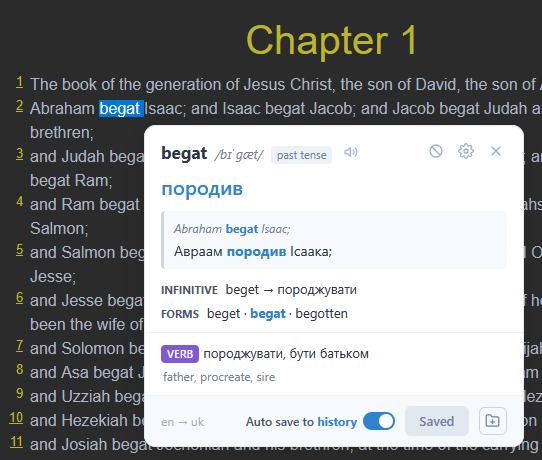
Вивчаєте англійську?
Встановіть розширення Notelang, щоб зручно перекладати незнайомі слова під час читання та зберігати їх у свій словник.




Паперові видання
Old Testament
• Gen. • Exod. • Lev. • Num. • Deut.
• Josh. • Judg. • Ruth • 1 Sam. • 2 Sam. • 1 Kgs. • 2 Kgs. • 1 Chr. • 2 Chr. • Ezra • 2 Ezra • 3 Ezra • Neh. • Tob. • Jud. • Esth. • 1 Mac. • 2 Mac. • 3 Mac.
• Job • Ps. • Prov. • Eccl. • Song • Wisd. • Sir.
• Isa. • Jer. • Lam. • Let. Jer. • Bar. • Ezek. • Dan.
• Hos. • Joel • Amos • Obad. • Jonah • Mic. • Nah. • Hab. • Zeph. • Hag. • Zech. • Mal.
Вивчаєте англійську?
Встановіть розширення Notelang, щоб зручно перекладати незнайомі слова під час читання та зберігати їх у свій словник.