




|
Chapter 9
|
Глава́ ѳ҃
|
|
1
|
1
|
|
About that time came Antiochus with dishonour out of the country of Persia.
|
Тогѡ́ же вре́мене а҆нтїо́хъ съ безче́стїемъ возврати́сѧ ѿ персі́ды.
|
|
2
|
2
|
|
For he had entered the city called Persepolis, and went about to rob the temple, and to hold the city; whereupon the multitude running to defend themselves with their weapons put them to flight; and so it happened, that Antiochus being put to flight of the inhabitants returned with shame.
|
Вни́де бо во гра́дъ глаго́лемый персе́поль и҆ покꙋси́сѧ расхи́тити хра́мъ и҆ гра́дъ ѡ҆бдержа́ти: тогѡ̀ ра́ди мно́жествꙋ оу҆стреми́вшꙋсѧ, къ по́мощи ѻ҆рꙋ́жїй ѡ҆брати́шасѧ: и́ та́кѡ слꙋчи́сѧ прогна́номꙋ а҆нтїо́хꙋ ѿ градожи́телей со сра́момъ возврати́тисѧ.
|
|
3
|
3
|
|
Now when he came to Ecbatane, news was brought him what had happened unto Nicanor and Timotheus.
|
Сꙋ́щꙋ же є҆мꙋ̀ при є҆квата́нѣ, возвѣсти́шасѧ є҆мꙋ̀ содѣ̑ѧннаѧ при нїкано́рѣ и҆ тїмоѳе́и.
|
|
4
|
4
|
|
Then swelling with anger, he thought to avenge upon the Jews the disgrace done unto him by those that made him flee. Therefore commanded he his chariotman to drive without ceasing, and to dispatch the journey, the judgment of God now following him. For he had spoken proudly in this sort, That he would come to Jerusalem, and make it a common burying place of the Jews.
|
Возне́ссѧ же ꙗ҆́ростїю, мнѧ́ше и҆ прогна́вшихъ є҆го̀ ѕло́бꙋ нанестѝ на і҆ꙋдє́и: сегѡ̀ ра́ди повелѣ̀ возни́цѣ непреста́ннѡ гонѧ́щемꙋ соверша́ти ше́ствїе, нбⷭ҇номꙋ сꙋдꙋ̀ понꙋжда́ющꙋ є҆го̀, си́це бо гордели́вѣ речѐ: гро́бищное мѣ́сто і҆ꙋде́ємъ і҆ерⷭ҇ли́мъ, прише́дъ та́мѡ, сотворю̀.
|
|
5
|
5
|
|
But the Lord Almighty, the God of Israel, smote him with an incurable and invisible plague: for as soon as he had spoken these words, a pain of the bowels that was remediless came upon him, and sore torments of the inner parts;
|
Всеви́децъ же гдⷭ҇ь бг҃ъ і҆и҃левъ поразѝ є҆го̀ неизцѣ́льною и҆ неви́димою ꙗ҆́звою: и҆зре́кшꙋсѧ бо є҆гѡ̀ сло́вꙋ, а҆́бїе ѡ҆б̾ѧ́тъ є҆го̀ оу҆тро́бнаѧ неизѣ́льнаѧ болѣ́бзнь и҆ гѡ́рькїѧ внꙋ́трєннїѧ мꙋ̑ки,
|
|
6
|
6
|
|
and that most justly: for he had tormented other men's bowels with many and strange torments.
|
ѕѣлѡ̀ пра́веднѣ, ꙗ҆́кѡ мно́гими и҆ стра́нными напа́стьми и҆ны́хъ оу҆трѡ́бы мꙋ́чи. Ѻ҆́нъ же ника́коже ѿ киче́нїѧ (своегѡ̀) преста̀:
|
|
7
|
7
|
|
Howbeit he nothing at all ceased from his bragging, but still was filled with pride, breathing out fire in his rage against the Jews, and commanding to haste the journey: but it came to pass that he fell down from his chariot, carried violently; so that having a sore fall, all the members of his body were much pained.
|
є҆ще́ же и҆ горды́ни и҆сполнѧ́шесѧ, ѻ҆гне́мъ ды́шꙋщь ꙗ҆́рости на і҆ꙋдє́и и҆ заповѣ́давъ оу҆скори́ти ше́ствїе: слꙋчи́сѧ же и҆ па́сти є҆мꙋ̀ ѿ колесни́цы со оу҆стремле́нїемъ и҆дꙋ́щїѧ, и҆ лю́тымъ паде́нїемъ па́дшемꙋ всѧ̑ оу҆ды пло́ти сокрꙋши́ти.
|
|
8
|
8
|
|
And thus he that a little afore thought he might command the waves of the sea, (so proud was he beyond the condition of men) and weigh the high mountains in a balance, was now cast on the ground, and carried in an horselitter, shewing forth unto all the manifest power of God.
|
Ѻ҆́нъ же, и҆́же ма́лѡ пре́жде мнѧ́й волна́мъ мѡрски́мъ повелѣва́ти, ѿ го́рдости па́че человѣ́чи, и҆ мѣ́риломъ высотꙋ̀ го́ръ мнѧ́сѧ и҆змѣ́рити, до землѝ смире́нъ на носи́лѣ носѧ́шесѧ, ꙗ҆́внꙋю бж҃ию си́лꙋ всѣ̑мъ показꙋ́ѧ:
|
|
9
|
9
|
|
So that the worms rose up out of the body of this wicked man, and whiles he lived in sorrow and pain, his flesh fell away, and the filthiness of his smell was noisome to all his army.
|
ꙗ҆́кѡ и҆ ѿ тѣлесѐ нечести́вагѡ че́рвїю кипѣ́ти, и҆ живꙋ́щꙋ въ болѣ́знехъ и҆ въ мꙋче́нїихъ, пло́ти є҆гѡ̀ и҆злїѧ́тисѧ ѿ смра́да же є҆гѡ̀ и҆ гно́ѧ всѝ во́ини гнꙋша́хꙋсѧ.
|
|
10
|
10
|
|
And the man, that thought a little afore he could reach to the stars of heaven, no man could endure to carry for his intolerable stink.
|
И҆ ма́лѡ пре́жде небе́сныхъ ѕвѣ́здъ каса́тисѧ мнѧ́щаго никто́же можа́ше носи́ти, смра́да ра́ди лю́тагѡ.
|
|
11
|
11
|
|
Here therefore, being plagued, he began to leave off his great pride, and to come to the knowledge of himself by the scourge of God, his pain increasing every moment.
|
Ѿсю́дꙋ оу҆̀бо нача̀ ѿ многїѧ горды́ни своеѧ̀ престава́ти оу҆ѧ́звленъ и҆ въ позна́нїе приходи́ти (наꙋче́нъ) бж҃їею ꙗ҆́звою повсеча́стнѡ оу҆множее болѣ́зни своеѧ̀ прїемлѧ.
|
|
12
|
12
|
|
And when he himself could not abide his own smell, he said these words, It is meet to be subject unto God, and that a man that is mortal should not proudly think of himself, as if he were God.
|
И҆ є҆гда̀ нижѐ са́мъ смра́да своегѡ̀ терпѣ́ти можа́ше, та́кѡ речѐ: пра́ведно є҆́сть повинꙋ́тисѧ бг҃ови, и҆ сме́ртнꙋ сꙋ́щꙋ ра̑внаѧ бг҃ови не мꙋ́дрствовати го́рдѣ.
|
|
13
|
13
|
|
This wicked person vowed also unto the Lord, who now no more would have mercy upon him, saying thus,
|
Молѧ́шесѧ же скве́рный ко никогда̀ хотѧ́щемꙋ поми́ловати є҆го̀ вл҃цѣ̀, та́кѡ глаго́лѧ:
|
|
14
|
14
|
|
That the holy city (to the which he was going in haste, to lay it even with the ground, and to make it a common burying place,) he would set at liberty:
|
сты́й оу҆́бѡ гра́дъ, є҆го́же тща́хсѧ пришедъ во пра́хъ ѡ҆брати́ти и҆ мѣ́сто гро́бищное созда́ти, свобо́денъ ѡ҆ста́влю,
|
|
15
|
15
|
|
and as touching the Jews, whom he had judged not worthy so much as to be buried, but to be cast out with their children to be devoured of the fowls and wild beasts, he would make them all equals to the citizens of Athens:
|
і҆ꙋде́євъ же, и҆̀хже хотѣ́хъ нижѐ погребе́нїе сподо́бите, но пти́цємъ ѕвѣрє́мъ на растерза́нїе преда́ти со младє́нцы, всѣ́хъ и҆̀хъ ра́вныхъ а҆ѳине́ѡмъ сотворю̀:
|
|
16
|
16
|
|
and the holy temple, which before he had spoiled, he would garnish with goodly gifts, and restore all the holy vessels with many more, and out of his own revenue defray the charges belonging to the sacrifices:
|
хра́мъ же ст҃ы́й, є҆го́же пре́жде ѡ҆гра́бихъ, предо́брыми да̑ры оу҆крашꙋ̀, и҆ свѧщє́нныѧ сосꙋ́ды мно́гѡ бо́лше всѧ̑ возда́мъ, и҆ подоба́ющаѧ къ же́ртвамъ и҆ждивє́нїю ѿ свои́хъ дохо́дѡвъ пода́мъ:
|
|
17
|
17
|
|
yea, and that also he would become a Jew himself, and go through all the world that was inhabited, and declare the power of God.
|
къ си̑мъ же и҆ і҆ꙋде́аниномъ бы́ти, и҆ всѧ́кое мѣ́сто ѡ҆бита́емо проходи́ти, и҆ проповѣ́дати бж҃їю держа́вꙋ и҆́мамъ.
|
|
18
|
18
|
|
But for all this his pains would not cease: for the just judgment of God was come upon him: therefore despairing of his health, he wrote unto the Jews the letter underwritten, containing the form of a supplication, after this manner:
|
Но ника́коже престаю́щымъ болѣ́знемъ, на́йде бо на́нь првⷣный бж҃їй сꙋ́дъ, ѡ҆ себѣ̀ ѿча́ѧвсѧ, писа̀ ко і҆ꙋде́ѡмъ ниженапи́санное посла́нїе, моле́нїѧ чи́нъ и҆мꙋ́щее, содержа́щее же сїѧ̑:
|
|
19
|
19
|
|
Antiochus, king and governor, to the good Jews his citizens wisheth much joy, health, and prosperity:
|
предѡ́брымъ гра́жданѡмъ і҆ꙋде́ѡмъ ѕѣлѡ̀ ра́доватисѧ и҆ здра́вствовати и҆ благоде́нствовати, ца́рь а҆нтїо́хъ и҆ страти́гъ:
|
|
20
|
20
|
|
if ye and your children fare well, and your affairs be to your contentment, I give very great thanks to God, having my hope in heaven.
|
а҆́ще здра́вствꙋете и҆ ча̑да, и҆ (и҆мѣ̑нїѧ) ва̑шѧ но мы́сли ва́мъ сꙋ́ть, благодарю̀ оу҆́бѡ бг҃ꙋ вели́кимъ благодаре́нїемъ, на нб҃о оу҆пова́нїе и҆мѣ́ѧ:
|
|
21
|
21
|
|
As for me, I was weak, or else I would have remembered kindly your honour and good will. Returning out of Persia, and being taken with a grievous disease, I thought it necessary to care for the common safety of all:
|
а҆́зъ же въ не́мощи лежа́щь, ва́шꙋ че́сть и҆ благопрїѧ́тство воспомина́хъ любе́знѡ: возвраща́ѧсѧ ѿ персі́дскихъ мѣ́стъ и҆ впа́дъ въ болы́знь тѧ́жкꙋ, нꙋ́жно возмнѣ́хъ попече́нїе воз̾имѣ́ти ѡ҆ ѻ҆́бщемъ всѣ́хъ оу҆твержде́нїи:
|
|
22
|
22
|
|
not distrusting mine health, but having great hope to escape this sickness.
|
не ѿчаѧва́ѧсѧ ѡ҆ себѣ̀, но оу҆пова́нїе мно́го и҆мѣ́ѧ и҆збѣжа́ти недꙋ́га,
|
|
23
|
23
|
|
But considering that even my father, at what time he led an army into the high countries, appointed a successor,
|
зрѧ́ же, ꙗ҆́кѡ и҆ ѻ҆те́цъ мо́й, въ нѧ́же времена̀ въ вы́шнихъ мѣ́стѣхъ воева̀, показа̀ и҆мꙋ́щаго прїѧ́ти по не́мъ нача́лство,
|
|
24
|
24
|
|
to the end that, if any thing fell out contrary to expectation, or if any tidings were brought that were grievous, they of the land, knowing to whom the state was left, might not be troubled:
|
да а҆́ще что̀ проти́вно слꙋчи́тсѧ и҆лѝ возвѣсти́тсѧ что̀ бѣ́дственно, вѣ́дꙋще сꙋ́щїи по страна́мъ, комꙋ̀ вла́сть ввѣ́рена, не смꙋтѧ́тсѧ:
|
|
25
|
25
|
|
Again, considering how that the princes that are borderers and neighbours unto my kingdom wait for opportunities, and expect what shall be the event, I have appointed my son Antiochus king, whom I often committed and commended unto many of you, when I went up into the high provinces; to whom I have written as followeth:
|
къ си̑мъ же помышлѧ́ю прїлежа́щихъ могꙋ́тникѡвъ и҆ сосѣ́дей ца́рствїю вре́мене оу҆смотрѧ́ющихъ и҆ слꙋ́чаѧ ѡ҆жидающихъ, ѡ҆ѣ́ѧви́хъ сы́на моего̀ а҆нтїо́ха царе́мъ, є҆го́же мно́гаши ѡ҆бходѧ́щь вы̑шнїй сатра̑пїи мнѡ́гимъ ѿ ва́съ препорꙋча́хъ и҆ представлѧ́хъ, писа́хъ же къ немꙋ̀, ꙗ҆̀же нижа́е пи̑сана сꙋ́ть:
|
|
26
|
26
|
|
Therefore I pray and request you to remember the benefits that I have done unto you generally, and in special, and that every man will be still faithful to me and my son.
|
молю̀ оу҆̀бо ва́съ и҆ прошꙋ̀, да по́мнѧще благодѣѧ̑нїѧ во ѻ҆́бще и҆ ѡ҆со́бнѡ, кі́йждо содержитѐ сꙋ́щее благопрїѧ́тство ко мнѣ̀ и҆ сы́нꙋ моемꙋ̀:
|
|
27
|
27
|
|
For I am persuaded that he understanding my mind will favourably and graciously yield to your desires.
|
оу҆пова́ю бо, ꙗ҆́кѡ ѻ҆́нъ кро́тцѣ и҆ человѣколю́бнѣ, послѣ́дꙋющь моемꙋ̀ произволе́нїю, соѡбща́тисѧ ва́мъ бꙋ́детъ.
|
|
28
|
28
|
|
Thus the murderer and blasphemer having suffered most grievously, as he entreated other men, so died he a miserable death in a strange country in the mountains.
|
Мꙋжеꙋбі́йца оу҆̀бо и҆ хꙋ́льникъ ѕлѣ̑йшаѧѣ пострада́въ, ꙗ҆́коже и҆ны̑мъ сотворѝ, въ стра́нствѣ̀, на гора́хъ бѣ́дною сме́ртїю и҆зчезѐ.
|
|
29
|
29
|
|
And Philip, that was brought up with him, carried away his body, who also fearing the son of Antiochus went into Egypt to Ptolemeus Philometor.
|
Пренесе́ же тѣ́ло є҆гѡ̀ фїлі́ппъ све́рстникъ є҆гѡ̀: и҆́же и҆ оу҆боѧ́всѧ сы́на а҆нтїо́хова ко птоломе́ю фїломи́торꙋ во є҆гѵ́петъ ѿи́де.
|
Категорії
Паперові видання
Old Testament
• Gen. • Exod. • Lev. • Num. • Deut.
• Josh. • Judg. • Ruth • 1 Sam. • 2 Sam. • 1 Kgs. • 2 Kgs. • 1 Chr. • 2 Chr. • Ezra • 2 Ezra • 3 Ezra • Neh. • Tob. • Jud. • Esth. • 1 Mac. • 2 Mac. • 3 Mac.
• Job • Ps. • Prov. • Eccl. • Song • Wisd. • Sir.
• Isa. • Jer. • Lam. • Let. Jer. • Bar. • Ezek. • Dan.
• Hos. • Joel • Amos • Obad. • Jonah • Mic. • Nah. • Hab. • Zeph. • Hag. • Zech. • Mal.
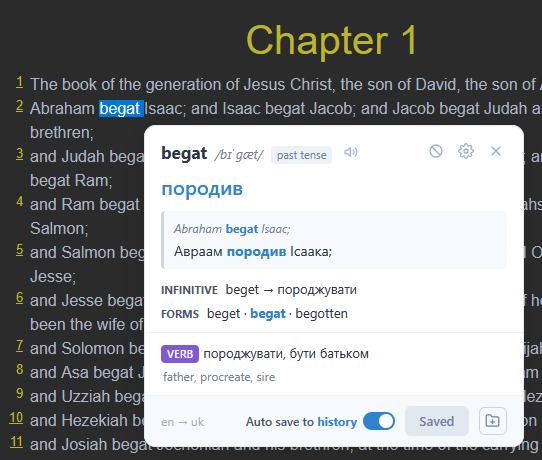
Вивчаєте англійську?
Встановіть розширення Notelang, щоб зручно перекладати незнайомі слова під час читання та зберігати їх у свій словник.




Паперові видання
Old Testament
• Gen. • Exod. • Lev. • Num. • Deut.
• Josh. • Judg. • Ruth • 1 Sam. • 2 Sam. • 1 Kgs. • 2 Kgs. • 1 Chr. • 2 Chr. • Ezra • 2 Ezra • 3 Ezra • Neh. • Tob. • Jud. • Esth. • 1 Mac. • 2 Mac. • 3 Mac.
• Job • Ps. • Prov. • Eccl. • Song • Wisd. • Sir.
• Isa. • Jer. • Lam. • Let. Jer. • Bar. • Ezek. • Dan.
• Hos. • Joel • Amos • Obad. • Jonah • Mic. • Nah. • Hab. • Zeph. • Hag. • Zech. • Mal.
Вивчаєте англійську?
Встановіть розширення Notelang, щоб зручно перекладати незнайомі слова під час читання та зберігати їх у свій словник.